
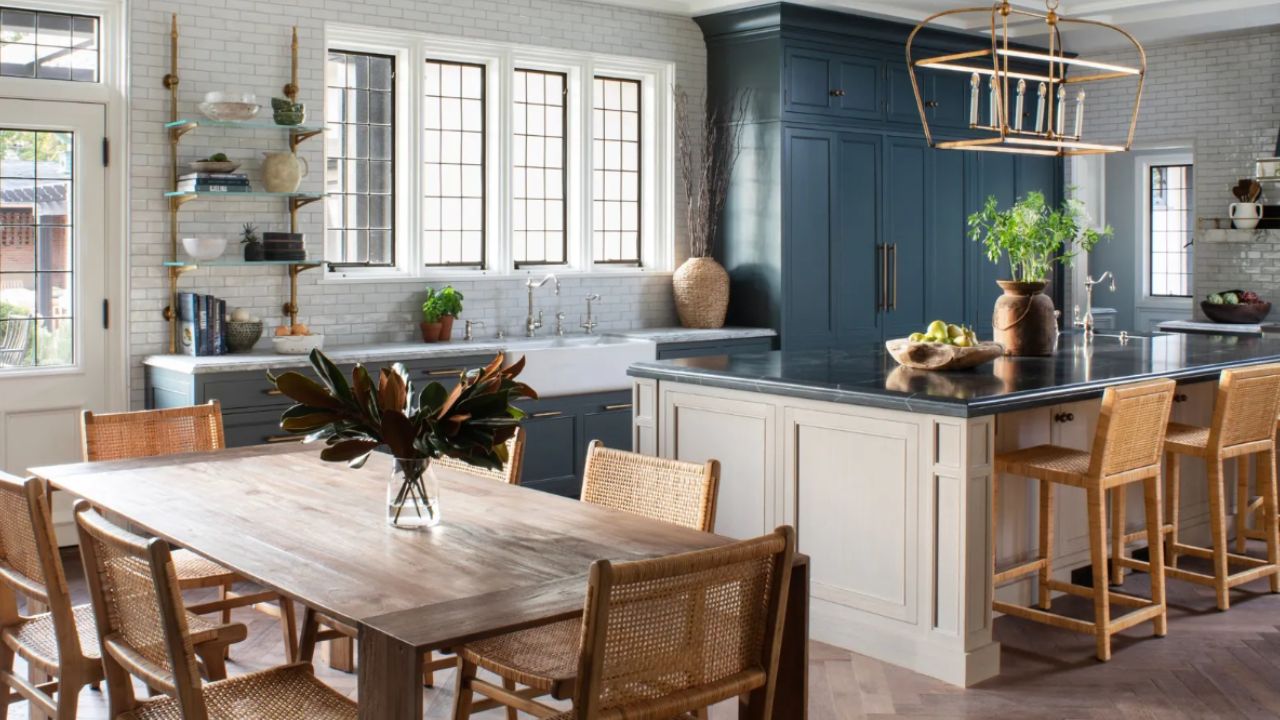
Designing a kitchen with bold aesthetic contrasts requires courage and vision. Mixing different metals, combining various wood tones, and balancing light and dark cabinets can easily get out of hand.
However, in this sophisticated and elegant gray kitchen in Los Angeles, according to Homes & Gardens, designer Steven Cooper from Cooper Pacific studio masterfully shows how to bring together functionality, style, and fun in a single space.
+ The metallic finish mistake that can compromise the aesthetics and durability of your kitchen
“It was one of the most fun projects we’ve ever worked on,” says Steven. “The house is 100 years old and, by Los Angeles standards, it’s historic. Much of the structure was intact, so we wanted to respect its essence. We modernized it carefully, preserving its soul and quirks.”
The result is a modern kitchen full of personality, with surprising combinations and smart design solutions. Below are 8 kitchen design ideas you can apply in your own space.
1. Choose a hero element and build the project around it
“I love including a bold and striking tone in the kitchen,” Steven explains. In this case, the original herringbone wood floor was the starting point. Although worn, its aesthetics inspired the entire rest of the design.
“We chose a floor with personality, but balanced it with neutral elements like the kitchen island, white subway tiles, and a wide white ceiling. Warmth must be present, especially in predominantly white spaces.”
2. Use color blocks to guide the eye
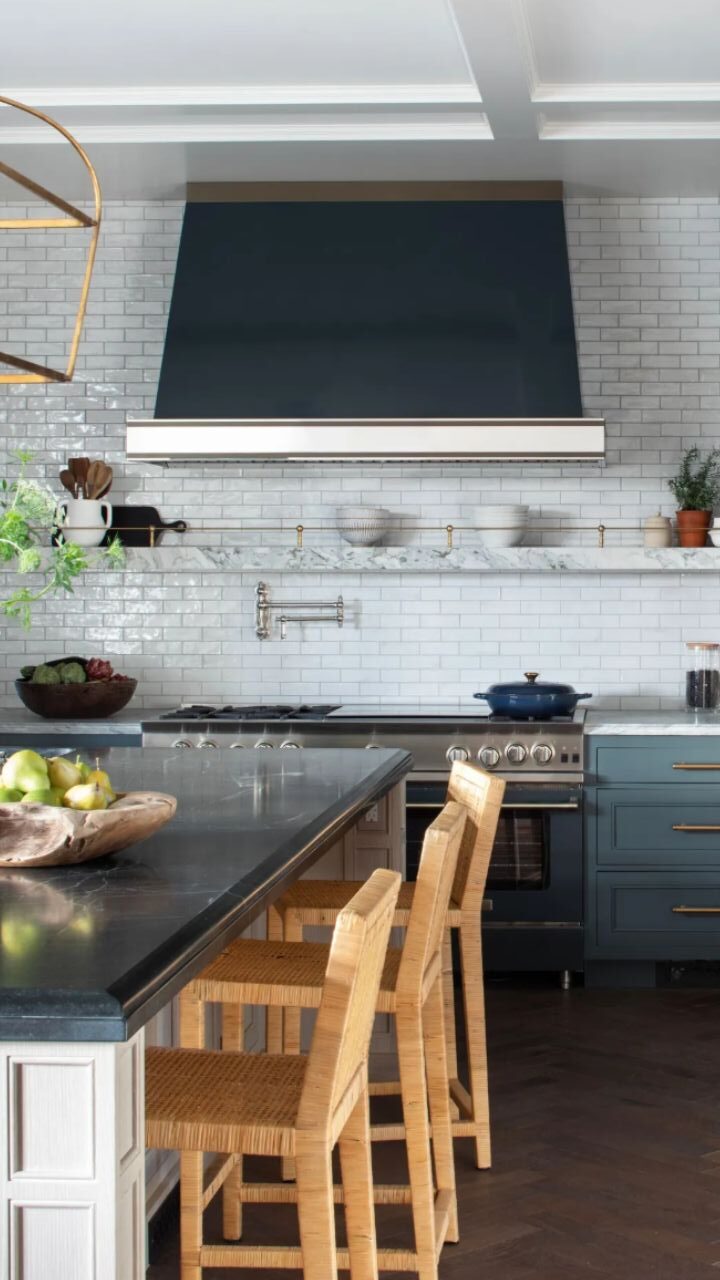
Steven created zones with contrasting colors to encourage visual movement. The surrounding cabinets are dark (Dark Pewter, Benjamin Moore), while the central island is painted in a light Driftwood shade.
“You want to draw the eye to the center and then expand it to the rest of the kitchen,” he says. The white tiles visually enlarge the space, and the dark cabinets add depth and sophistication.
3. Dark colors can (and should) be bold
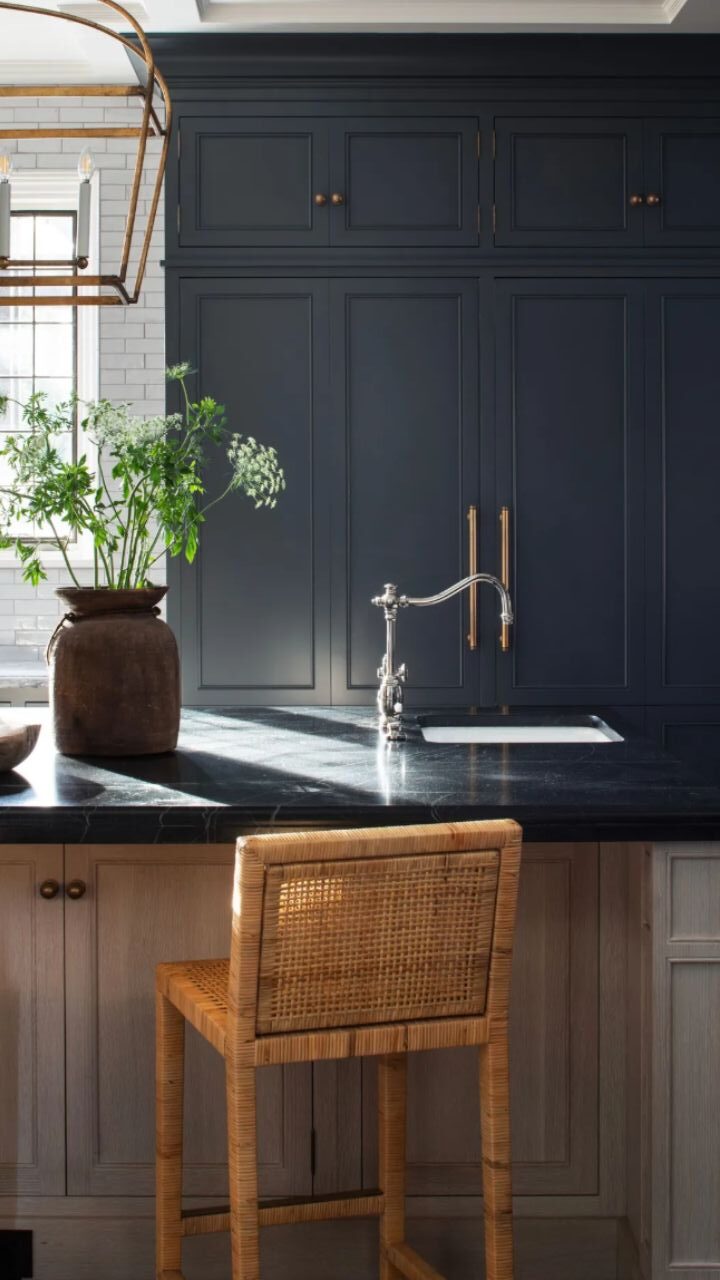
Using dark tones in light kitchens might seem risky, but Steven encourages boldness.
“Contrasting light and dark is essential. Taking the dark cabinets all the way to the ceiling added visual impact and character. An all-white kitchen would feel overly safe and lack personality.”
4. Dark countertops need texture variation
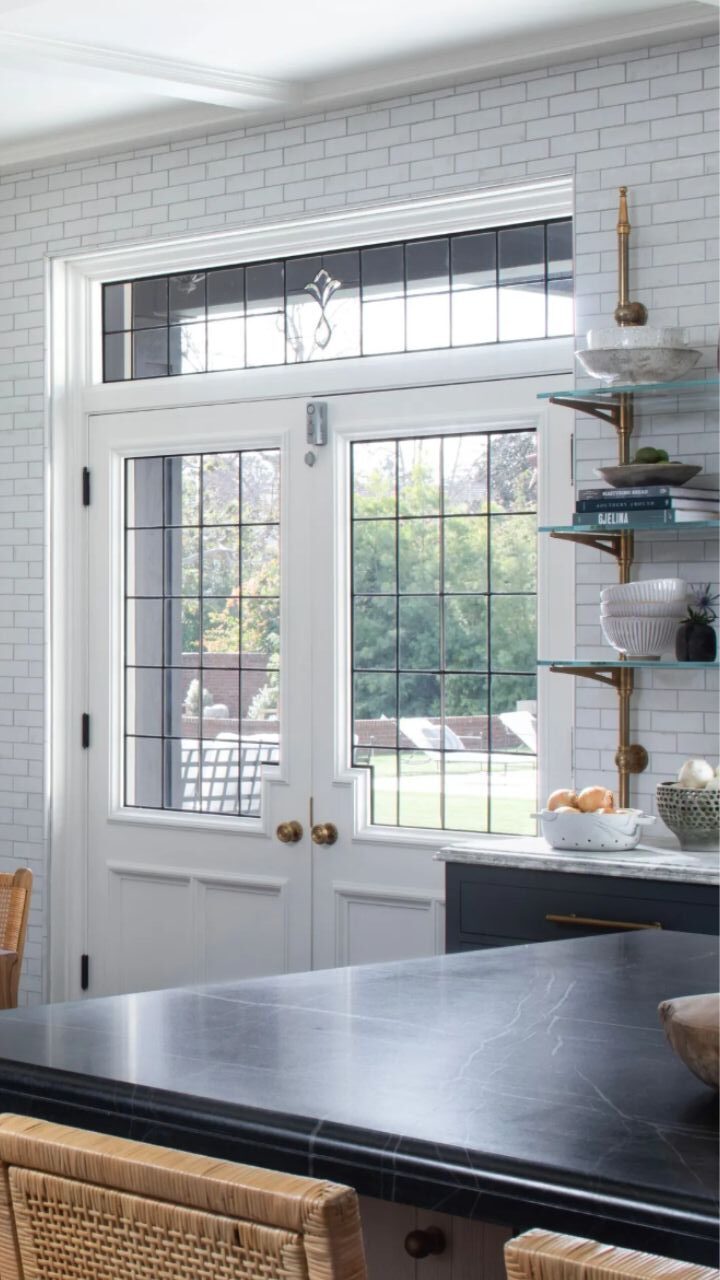
The black soapstone countertops with white veining were the perfect choice to balance light and depth.
“Avoid monotonous surfaces. This countertop doesn’t absorb all the light and still offers a sophisticated visual touch. It’s the middle ground between overly soft white and heavy black.”
5. Mixing metals in kitchen design works
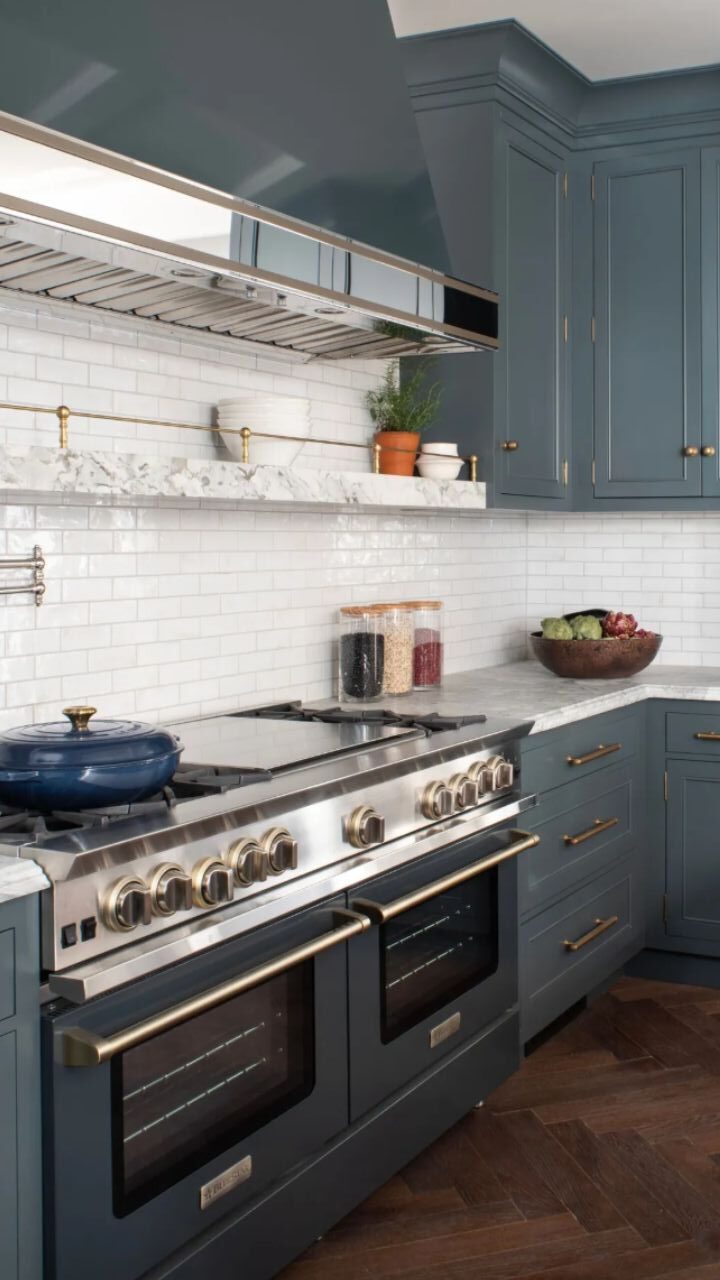
Forget the rule of sticking to one metal finish. Steven mixed waxed brass with chrome faucets skillfully.
“Brass brings charm and connects to the home’s original architecture. Chrome, more practical for wet areas, remains discreet. The mix enhances the details.”
6. Different wood tones can enrich the space
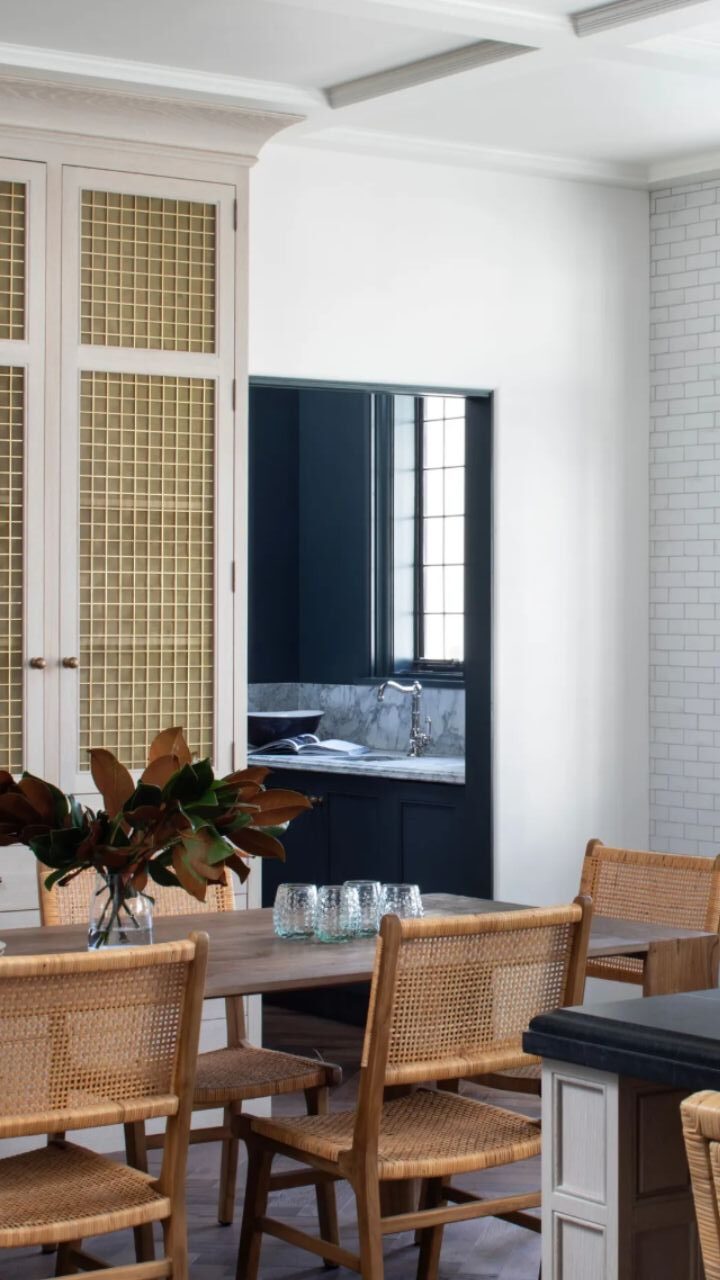
The variety of natural wood tones – in the floor, stools, and table – challenges the idea of uniformity but adds authenticity.
“Texture was the focus. The rustic table and the strong grain in the stools give the space character. Each piece tells a story and complements the floor design.”
7. Connect elements with a cohesive visual language
Despite so many combinations of colors, materials, and finishes, Steven created visual unity in the project.
“The brass-front cabinets in the dining area reflect the dark tones of the main cabinets, echo ceiling details, and match the texture of the floor. This interconnectedness allows for more boldness with harmony.”
8. Recessed lighting can transform the atmosphere
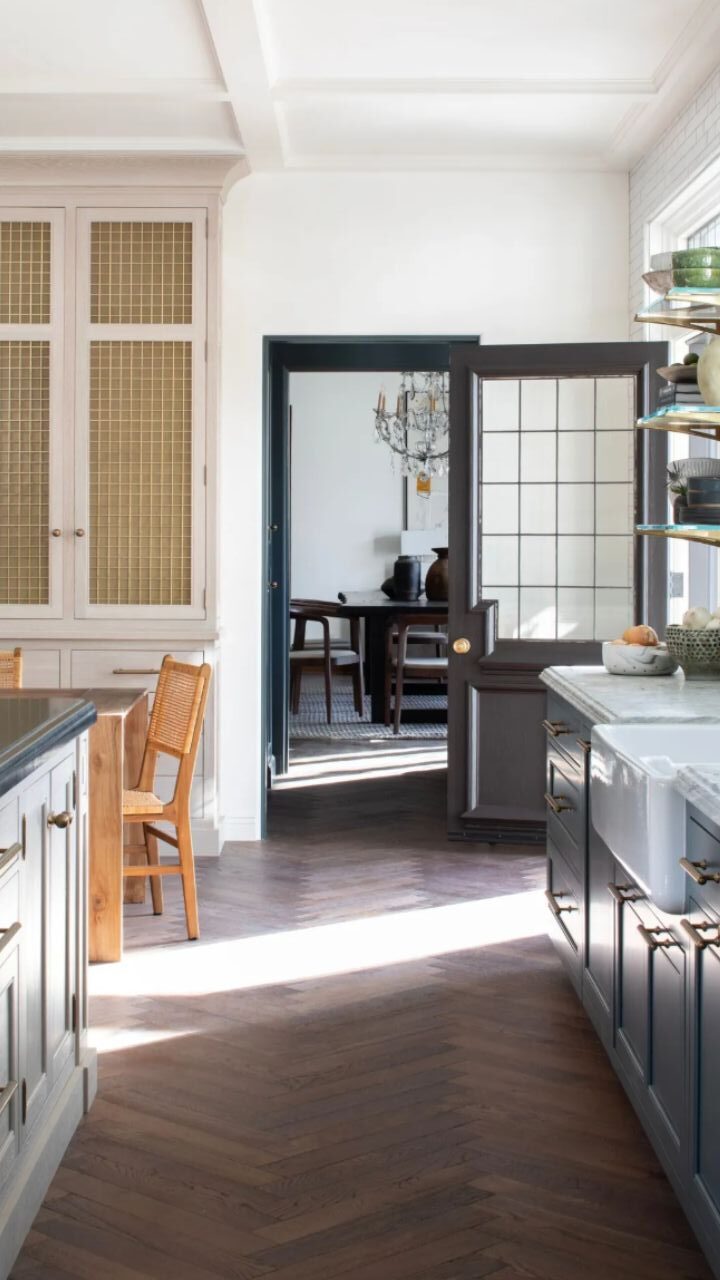
In addition to the striking pendant above the island, recessed lighting is strategically placed.
“It hides within the details of the ceiling and cabinets, creating a soft glow that makes the kitchen cozier. A perfect solution for relaxing evenings.”
This project by Steven Cooper shows how a modern gray kitchen can be anything but dull. By mixing materials, textures, colors, and lighting strategically, it’s possible to create a rich, functional, and personality-filled kitchen. Use these lessons to revamp yours with more confidence, sophistication, and creativity.
Source: Homes & Gardens
This content was created with the help of AI and reviewed by the editorial team.
